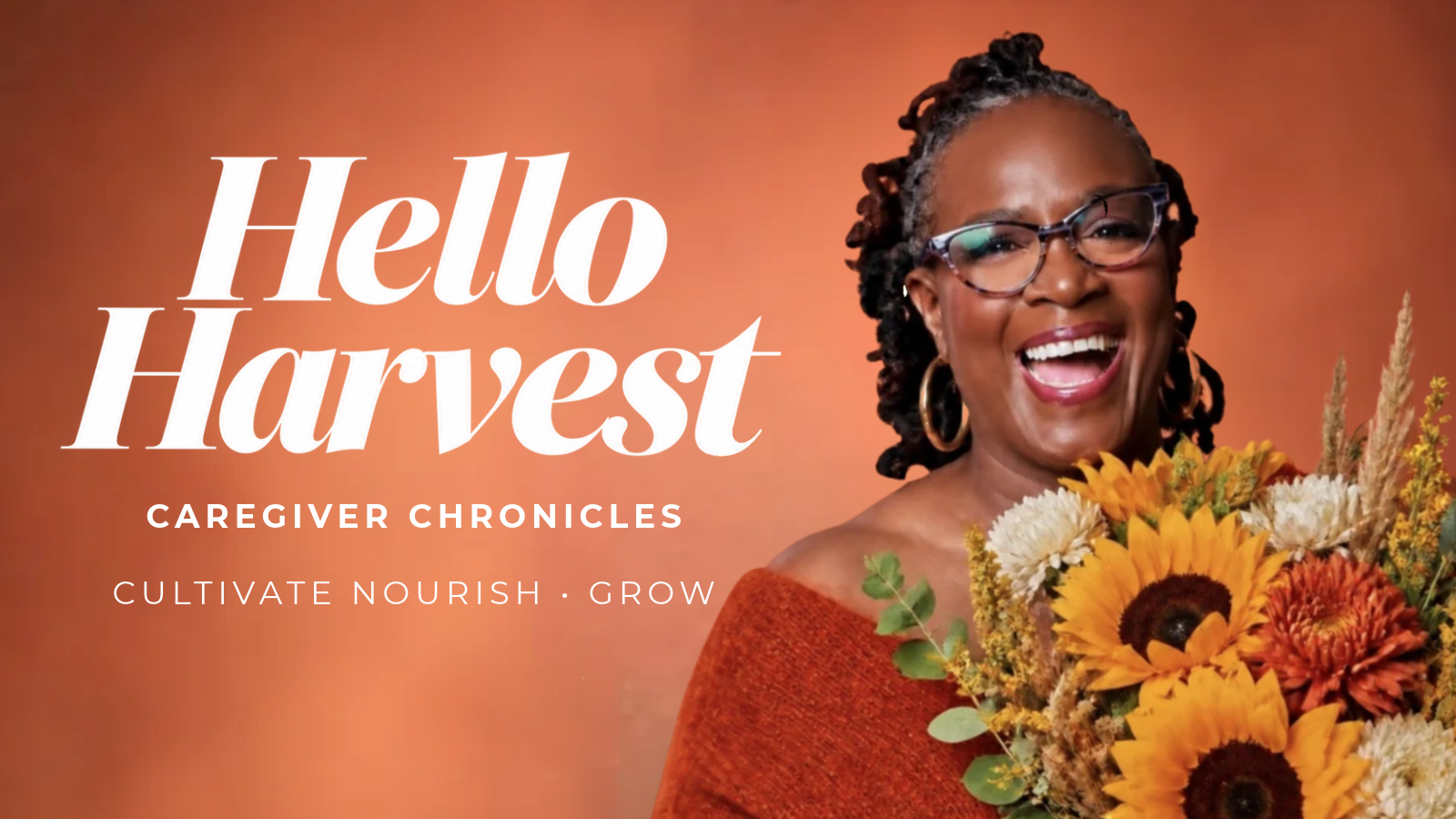
Caregiver Self-Care: Lessons from My Tower Garden
What Are You Growing?
Lessons on Harvest, Health, and Life from My Tower Garden
There is something special about watching something grow. You begin with something small. You nurture it, check on it, make adjustments, protect it, and wait. Then one day, you realize that what you have been tending is finally producing something you can enjoy.
That has been one of the joys of having my Tower Garden. Right now, I am growing lettuce, cucumbers, kale, celery, basil, and English lavender. And this isn't simply a garden that looks pretty sitting in my home. We have already begun consuming what we are growing!
Every time I look at those beautiful plants, I am reminded of the power of a harvest. But I am also reminded of something else: there is no harvest without a process. And isn't that true about life?
This article may contain affiliate links, which means I may earn a small commission at no extra cost to you. I only share resources I personally use or genuinely recommend.
The Harvest Doesn't Begin with the Harvest
We love harvest seasons. We love seeing the fruit, celebrating the accomplishment, and enjoying the finished product. But a harvest doesn't begin when you pick the lettuce, cucumber, kale, celery, basil, or lavender. The harvest begins much earlier. It begins with a decision to plant.
Then comes the tending, checking, waiting, adjusting, and nurturing. Sometimes there is even wondering. When you're waiting for something to grow, you don't always have evidence that the work you're doing is producing the results you want. You simply continue doing what you know is necessary.
That speaks so deeply to me as a caregiver and as someone who supports other caregivers. So much of caregiving is like that. You give, nurture, encourage, pray, make appointments, rearrange schedules, research, advocate, sacrifice, and show up. Many times, you do all of that without immediate evidence that your efforts are making a difference.
But they are seeds.
That doesn't mean every seed produces exactly what we hoped it would produce. Life doesn't give us that guarantee. It does mean, however, that the things we consistently cultivate have the ability to shape what comes next. That is why we must pay attention to what we are growing.
What Are You Growing?
My Tower Garden has caused me to ask myself a question that I believe all of us should occasionally ask: What am I growing?
I'm not talking only about what I'm growing in my garden. What am I growing in my life? What am I growing in my relationships, my mind, my spiritual life, and through my daily habits? And as a caregiver, what am I growing in the way I care for myself?
Whether we realize it or not, we are cultivating something. If I constantly cultivate exhaustion without making room for rest, eventually there will be a harvest from that. If I constantly say yes when I really need to say no, there will be a harvest from that. If I continually ignore my body's signals because everyone else's needs seem more important, eventually there may be consequences from that pattern.
But the opposite is also true.
If I begin cultivating healthy boundaries, something can grow from that. If I begin protecting time for rest, something can grow from that. If I ask for help instead of carrying everything alone, something can grow from that. If I intentionally nurture my relationship with God, something can grow from that. If I begin giving myself some of the same compassion I freely extend to others, something can grow from that too.
We have to become intentional about what we are planting.
Growing Food Has Made Me Think Differently
One of the things I appreciate about my Tower Garden is being able to see some of my food growing right in front of me. There is my lettuce, my cucumbers, my kale, my celery, my basil, and my English lavender. When I harvest something and bring it into my kitchen, there is a different connection to it because I watched it grow.
We regularly hear about produce recalls and food-safety concerns. Growing some of my own produce doesn't mean that food-safety practices suddenly become unnecessary. Homegrown food still needs to be grown, harvested, cleaned, stored, and handled properly. But I enjoy having greater visibility into where some of our food comes from. I know something about its journey because I have been part of that journey.
For me, it is another way of becoming more intentional about wellness. And I believe intentionality matters.
As caregivers, we can become so accustomed to responding to whatever happens next that we begin living almost entirely in reaction mode. Someone needs something, so we respond. There's an appointment, so we adjust. There's a crisis, so we react. There's another responsibility, so we squeeze it into an already full schedule.
Before long, we can lose the practice of intentionally asking, “What do I need to cultivate for my own well-being?”
My garden reminds me to ask.
Everything Cannot Be Harvested at the Same Time
Here's another lesson I've learned from growing things: everything doesn't mature at the same rate.
That's important because sometimes we become discouraged when one area of our lives isn't developing as quickly as another. We see someone else's harvest and start questioning our own progress. But perhaps their harvest is visible because they planted in a different season. You don't know how long someone else has been watering what you're just now seeing.
Caregiver, give yourself permission to grow at the pace your season requires.
Maybe your current harvest isn't a dramatic life transformation. Maybe your harvest is that you finally asked someone for help. Perhaps you slept an extra hour, went to your doctor's appointment instead of rescheduling it again, or told someone, “I can't do that today.”
Maybe you took fifteen minutes and sat quietly without feeling the need to accomplish something. Maybe you returned to prayer after feeling spiritually depleted. Maybe you stopped apologizing for needing rest. Maybe you finally realized that boundaries don't make you selfish; they help make your love sustainable.
Those things may seem small, but don't dismiss them. Small harvests are still harvests.
Sometimes Growth Requires Pruning
Here is the part we don't always enjoy: growing isn't only about adding. Sometimes growing requires removing.
Sometimes something has to be trimmed because what is taking energy from the plant is not contributing to its health. Our lives can require pruning too. There may be commitments we need to reconsider, expectations we need to release, relationships that require healthier boundaries, and habits that are consuming energy we no longer have to spare.
There may even be guilt that has overstayed its welcome. Perhaps there is an outdated version of ourselves that we keep trying to maintain because everyone around us has become accustomed to that person.
Pruning can feel like loss when it is actually making room for healthier growth.
That is why one of the questions I am asking myself during this harvest season is: What am I watering that I should stop feeding?
That's a powerful question because our energy is valuable. Our attention is valuable. Our peace is valuable. Our time is valuable. We shouldn't continue watering something simply because we've always watered it.
“In Due Season”
One of my favorite Scriptures for this season is Galatians 6:9: “And let us not be weary in well doing: for in due season, we shall reap, if we faint not.”
Those two words, due season, speak volumes.
There is a season for planting, a season for tending, a season for waiting, and a season for reaping. The difficulty is that we don't always get to decide how long the space between planting and harvesting will be.
That is where faith enters.
Sometimes faith looks like continuing to tend what God has placed in your hands even when you can't see the harvest yet. Sometimes faith looks like trusting that growth is happening beneath the surface. And sometimes faith looks like recognizing that the harvest God is producing may look different from the harvest you originally imagined.
Perhaps you were praying for your circumstances to change, but God was strengthening you in the middle of them. Perhaps you were praying for more capacity while God was teaching you to establish boundaries. Perhaps you were asking God to help you carry everything while He was showing you that you were never supposed to carry everything alone.
That is growth. That is harvest.
Caregiver, You Are Part of the Garden Too
This may be the most important lesson I want caregivers to take from my Tower Garden: You cannot spend your entire life tending everybody else's garden while allowing your own to die.
Read that again.
You matter in this equation. Your health matters. Your emotional well-being matters. Your spiritual health matters. Your relationships matter. Your dreams matter. Your rest matters. Your peace matters.
Yes, the person you care for needs you, but you need you too.
Self-care isn't about abandoning responsibility. It is about recognizing that you are a whole person while fulfilling those responsibilities. I want caregivers to stop thinking of themselves as the endless resource from which everybody else can draw.
You need replenishment. You need nourishment. You need tending too.
You Don't Have to Do This Alone
If you're ready to become more intentional about caring for yourself while caring for others, I invite you to explore my Self-Care Sisterhood Circle. It's an opportunity to prioritize your own well-being and make room for the encouragement, rest, and renewal you need.
Learn More About the Self-Care Sisterhood Circle - Click Here
Maybe It's Time to Plant Something New
As I enjoy the harvest from my Tower Garden, I'm also thinking about what comes next because harvest isn't the end of the story. A harvest provides nourishment, but it can also remind us to plant again.
So, what do you want to plant in this next season? Perhaps it is peace, better boundaries, more intentional rest, movement, prayer, joy, connection, or simply more time for yourself. Perhaps you even want to plant something practical, like growing some of your own herbs or vegetables.
If seeing what I am growing has inspired you to explore having a Tower Garden of your own, you can learn more through my Tower Garden link.
Affiliate Disclosure: I am a Tower Garden affiliate and earn a commission on purchases made through my link.
https://www.towergarden.com/#Ladydarlenelt
I have loved watching my lettuce, cucumbers, kale, celery, basil, and English lavender grow, and I especially love that we're already able to enjoy some of what we've cultivated.
But whether you ever grow a single vegetable isn't really the biggest lesson I want you to take from this.
I want you to remember to pay attention to what you are planting. Be intentional about what you water. Don't be afraid to prune. Give yourself grace while you wait. Celebrate even the small signs of growth. And when the harvest comes, don't be so busy looking for the next thing that you forget to enjoy the fruit of what you have already cultivated.
What Are You Ready to Harvest?
Before you leave this page, I want you to sit with a few questions. What have you planted this year? What have you faithfully watered? What are you growing that others may not be able to see yet? What needs pruning? What have you been watering that you need to stop feeding?
And finally: After everything you have planted, watered, survived, prayed through, and tended, what are you ready to harvest?
Write your answer down. Pray over it. Then keep tending what matters.
Your garden may not look like mine, and your harvest may not look like anyone else's. That's okay. Tend your garden.
Remember the promise: “In due season we shall reap, if we faint not.”
Keep planting, keep tending, and keep believing. And while you are caring for everyone and everything God has entrusted to you, don't forget to cultivate the person who is doing all that caring: you.
Refresh. Refill. Renew.
Breathe. Pray. Choose the next right thing.
God's peace is my permission.
— Pastor Dr. Darlene Thorne, M.Div.
The Caregiver's CoMentor®
